Not every contract needs identity verification.
For many everyday agreements, a secure signing link, a tamper-evident signed PDF and a clear audit trail may be enough.
But some contracts carry more risk.
The value may be higher. The signer may be remote. The agreement may be regulated. Or there may be a greater chance that someone could later dispute who signed.
In those situations, identity verification can add an important extra layer of confidence.
Inkless allows you to enable identity verification per recipient, only when you need it. The feature is powered by DIDIT and is available as an add-on at £1 per verification.
What is identity verification in Inkless?
Identify verification allows a sender to require a recipient to prove who they are before they complete signing.
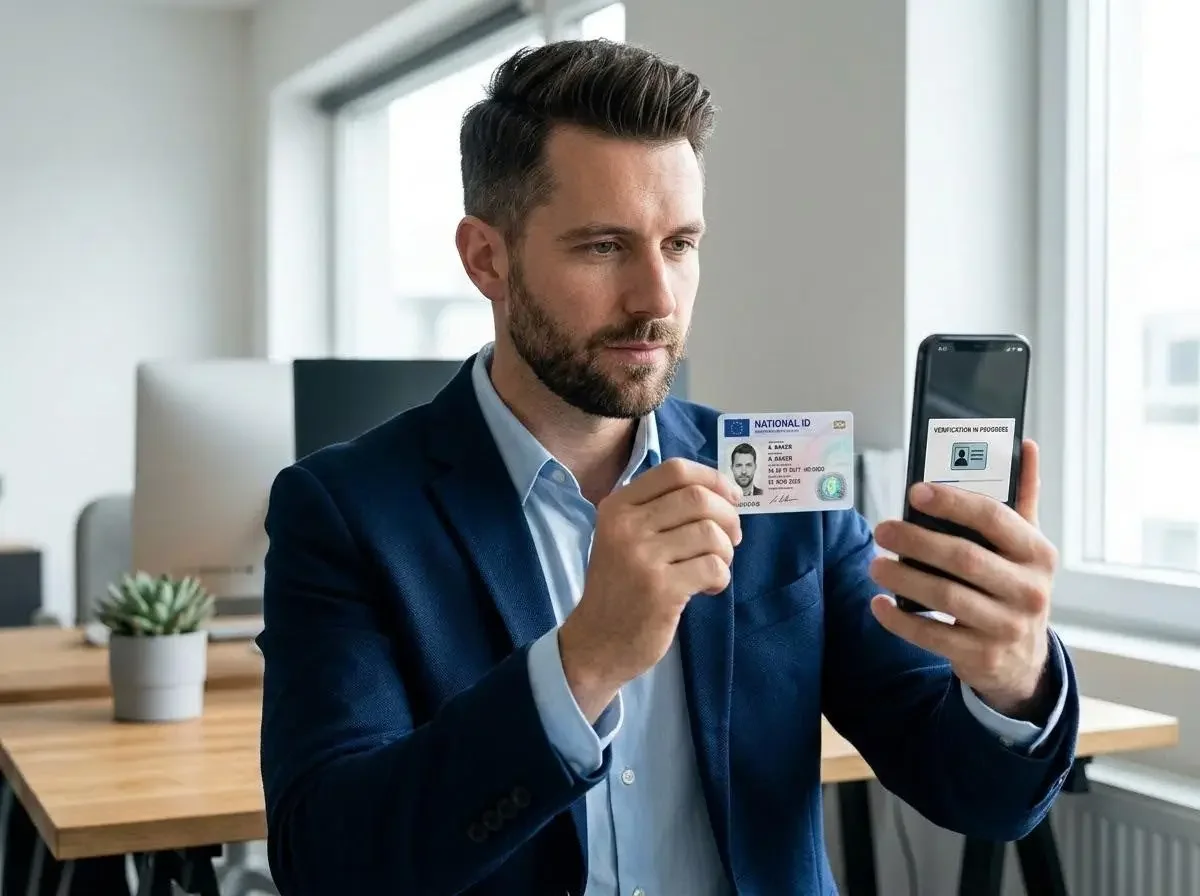
When enabled, the signer verifies their identity using a recognised form of photo ID and a live camera photo.
The result is captured in the audit trail and included in the court-ready bundle alongside the signed PDF.
This is useful because a standard e-signature confirms agreement, while identity verification helps confirm who agreed.
That distinction matters for higher-value, higher-risk or compliance-sensitive contracts.
How the DIDIT-powered flow works
Inkless identity verification is powered by DIDIT.
The process is designed to be used only when needed, rather than applied automatically to every signer.
A typical flow looks like this.
1. The sender adds the recipient
The sender prepares the document in Inkless and adds the recipients.
Each recipient can be configured separately.
This means one recipient can be asked to complete identity verification, while another can sign without it.
2. Identity verification is enabled for that recipient
The sender chooses to require identity verification for the relevant person.
This is useful when the risk is attached to one specific signer.
For example, a guarantor, director, applicant or external client may need verification, while an internal approver may not.
3. The signer receives a secure link
The signer receives the secure Inkless link and starts the signing process.
Before they can complete signing, they must complete the identity verification step.
4. The signer verifies their identity
The signer confirms who they are using:
-
A recognised form of photo ID
-
A live camera photo
This adds stronger identity assurance than a signing link alone.
5. Results are recorded
The verification result is recorded in the tamper-evident audit trail.
It is also included in the court-ready bundle alongside the signed PDF.
That creates a stronger evidence pack if the agreement ever needs to be reviewed later.
What does it cost?
Identity verification is charged at £1 per verification.
It is applied only when used.
Because the feature is enabled per recipient, you do not have to pay for identity verification across every signer or every document.
That keeps the cost proportionate.
For low-risk contracts, you can use the standard signing workflow.
For higher-risk contracts, you can add identity verification where it is justified.
When identity verification is worth using
Identity verification is most useful when signer identity is business-critical.
Here are the situations where the £1 fee is likely to be well justified.
High-value contracts
The higher the value of the agreement, the more important identity confidence becomes.
Examples include:
-
High-value service agreements
-
Supplier contracts
-
Finance agreements
-
Property-related documents
-
Director approvals
-
Business sale documents
-
Long-term commercial commitments
This is different from Companies House's mandatory identity verification for company directors - Inkless verification is an optional extra layer for the signing process itself, not a replacement for statutory checks.
If a contract is worth thousands of pounds, the additional identity check can be a sensible precaution.
The cost is small compared with the potential cost of a dispute.
Regulated or compliance-sensitive workflows
Some industries need a stronger evidence trail.
This may include:
-
Finance
-
Legal services
-
Property
-
Recruitment
-
Professional services
-
Healthcare administration
-
Compliance-led onboarding
In these workflows, identity verification can help support a more complete record.
It does not replace your internal compliance process, but it can add useful evidence around who completed the signing step.
Contracts with a higher dispute risk
Some documents are more likely to be challenged later.
For example:
-
Personal guarantees
-
Loan agreements
-
Settlement agreements
-
Tenancy-related agreements
-
Remote client approvals
-
Sensitive HR documents
-
Agreements involving parties who have not met in person
If someone later says, “That was not me,” a standard audit trail is useful.
An audit trail plus identity verification is stronger.
Remote signing with new clients
Remote signing is convenient, but it can reduce face-to-face confidence.
If you are working with a new client, contractor, employee, tenant, landlord or supplier, identity verification may help reduce uncertainty.
This is especially useful when the relationship is new and the agreement carries meaningful risk.
When only one signer needs extra checks
Not every signer carries the same risk.
One document may involve several recipients, but only one person needs verification.
For example:
-
A client verifies their identity, but an internal manager does not
-
A guarantor verifies their identity, but the applicant uses standard signing
-
A company director verifies their identity, but a witness does not
-
A remote external party verifies their identity, but known internal users do not
Inkless supports this per-recipient approach, so the extra step is only applied where it makes sense.
When you probably do not need identity verification
Identity verification is useful, but it should not be added to every workflow automatically.
There are plenty of cases where standard e-signing is enough.
Low-risk internal documents
If the signer is already known to the business and the document is low risk, identity verification may not be necessary.
Examples include:
-
Internal policy acknowledgements
-
Routine approvals
-
Basic admin forms
-
Low-risk HR documents
-
Simple internal confirmations
In these cases, adding identity verification may create more friction than value.
Established client relationships
If you already know the signer and the document is not high value or sensitive, standard signing may be enough.
For example, an existing client approving a routine document may not need to complete an ID check every time.
Simple acknowledgements
Some documents only need confirmation that information has been received or accepted.
Examples include:
-
Policy confirmations
-
Basic consent forms
-
Routine notices
-
Low-value approvals
For these workflows, identity verification may be unnecessary.
When speed is the priority
Every extra step adds some friction.
If the agreement is low risk and the goal is to get something signed quickly, standard e-signing may be the better fit.
The key is to match the level of verification to the level of risk.
A simple decision framework
Before enabling identity verification, ask four questions.
1. Is the contract high value?
If yes, identity verification is worth considering.
2. Could the signer later dispute the agreement?
If yes, stronger identity evidence may be useful.
3. Is the workflow regulated or compliance-sensitive?
If yes, identity verification may support a stronger record.
4. Do you know and trust the signer?
If no, verification may help reduce uncertainty.
If the answer to all four questions is no, standard e-signing may be enough.
Identity verification without overcomplicating the workflow
The goal is not to make every contract harder to sign.
The goal is to apply the right level of assurance to the right agreement.
Inkless gives you that flexibility.
For everyday documents, you can use the standard secure signing process.
For higher-value, regulated or dispute-risk contracts, you can enable DIDIT-powered identity verification per recipient.
That means you only add the extra step when the risk justifies it.
Final thoughts
Identity verification is not needed for every contract.
But when signer identity matters, it can add valuable evidence to the signing process.
With Inkless, identity verification is powered by DIDIT, enabled per recipient and charged at £1 per verification.
Use it for high-value contracts, regulated workflows, remote signers and agreements where identity could later be disputed.
Use standard e-signing when the workflow is simple, low risk and the signer is already known.
That balance keeps signing practical, secure and proportionate.