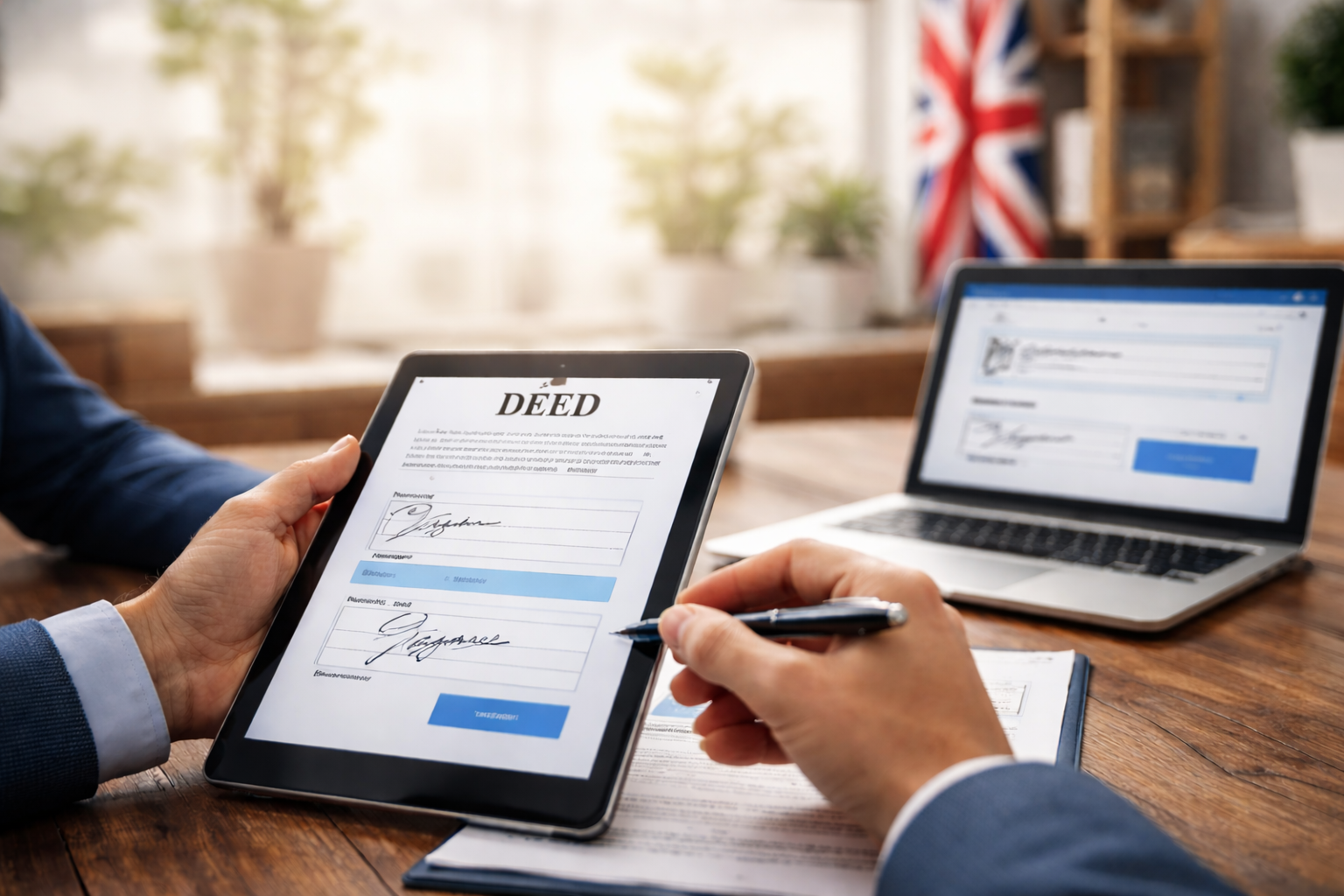
Electronic signatures are now widely accepted across the UK, but when it comes to witnessing deeds, the rules are more specific. Many businesses and individuals ask whether an electronic signature witness in the UK is legally valid, and what laws actually apply.
This guide explains how electronic witnessing works in the UK, what is permitted under the law, and how businesses can confidently manage deed signing using modern digital tools like Inkless.
What Is a Deed and Why Does It Need a Witness?
A deed is a legal document used for transactions where formality matters, such as:
-
Property transfers
-
Deeds of variation
-
Powers of attorney
-
Certain guarantees and contracts
Under UK law, a deed must be:
-
In writing
-
Clearly stated to be a deed
-
Signed by the individual
-
Witnessed by an independent person
The witnessing requirement exists to reduce fraud and confirm that the signatory acted willingly.
Are Electronic Signatures Legal in the UK?
Yes. Electronic signatures are legally recognised in the UK under two key frameworks:
-
The eIDAS Regulation (retained in UK law post-Brexit)
Together, these confirm that an electronic signature is valid provided the parties intend to sign and the method used is reliable.
If you’re curious about how electronic signing works in practice or the features available to support compliance, visit our Inkless features page to see tools like audit trails, multi-signer workflows and secure document handling in action.
However, while electronic signature validity is established under UK law, electronic witnessing must still meet certain criteria to be legally binding.
Can a Deed Be Witnessed Electronically in the UK?
Yes, electronic witnessing is possible in the UK, but only when certain legal requirements are met.
In England and Wales, a deed may be signed using an electronic signature, provided the witness is physically present with the person signing at the time the signature is applied. The key point is that the act of signing must be observed in real time, even though the signature itself is digital.
In practice, this means the witness watches the signer apply their electronic signature and then signs the document themselves as part of the same signing process. Both signatures are recorded together, forming a single, auditable transaction.
It is important to note that remote witnessing via video call is not currently permitted for deeds in England and Wales, regardless of whether electronic signatures are used.
If you would like to see how this process works in practice, you can explore how Inkless supports multi-signer and witnessed document workflows on our How It Works page.
What Counts as a Valid Electronic Signature Witness in the UK?
To meet UK legal requirements, an electronic signature witness must:
-
Be physically present with the signer
-
Be independent and not a party to the deed
-
Observe the act of signing in real time
-
Sign the document themselves (electronically or wet ink)
Using an electronic signing platform can help record:
-
Time and date of signatures
-
Identity details
-
Full audit trails
These records are especially important if the deed is ever challenged.
For questions on document validity, audit trails, or compliance, see the Inkless FAQ.
How Inkless Supports Electronic Witnessing
Inkless supports the steps required for witnessed deeds by offering:
-
Clear signer and witness role assignment
-
Multi-signer workflows so both parties sign sequentially
-
Legally binding audit trails with timestamped records
-
Secure, compliant digital signing environments
Explore the full suite of signing options and capabilities on our features page.
While Inkless enables the technical process of electronic signatures and witnessing, remember that legal compliance depends on how the process is executed, particularly the requirement for physical presence at the time of signing.
What About Scotland and Northern Ireland?
Rules differ slightly:
-
Scotland allows more flexibility and has been more open to remote witnessing in certain circumstances
-
Northern Ireland broadly follows the England and Wales approach, with physical presence typically required
If you are dealing with cross-jurisdiction deeds, consider legal advice for assurance.
Common Misconceptions About Electronic Witnessing
“Video calls are allowed for witnessing”
Not for deeds in England and Wales.
“Any electronic signature platform makes witnessing legal”
Tools support the process, but legal compliance depends on execution.
“eIDAS allows remote witnessing”
eIDAS governs signature validity, not witnessing requirements.
Best Practice for UK Businesses
If you need an electronic signature witness in the UK, follow these best practices:
-
Ensure the witness is physically present
-
Use a platform with a full audit trail
-
Clearly label the document as a deed
-
Assign signer and witness roles clearly
-
Retain signature records securely
For a transparent view of Inkless pricing and options based on how often you send documents, see Pricing.
Final Thoughts
Electronic signatures are firmly established in UK law, but witnessing deeds still requires care. While electronic signatures are valid under the Electronic Communications Act 2000 and eIDAS, physical presence remains essential for witnesses in most UK jurisdictions.
Inkless provides a secure, efficient way to manage electronic deed signing while supporting compliant witnessing workflows. With intuitive tools, clear role assignments and full audit trails, Inkless is a modern solution for UK businesses looking to streamline signed deed management.